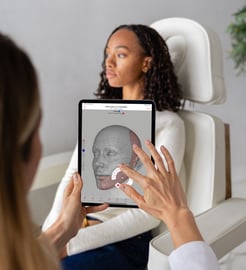
Dermatology practices aren’t standing still anymore.
The practices outperforming their peers today aren’t necessarily the biggest practices or the ones seeing the most patients. More often, they’re the ones adapting fastest to changing patient expectations, staffing pressures, reimbursement complexity, and new technology.
Across the industry, we’re seeing a shift away from “good enough” systems toward connected platforms that reduce friction for both staff and patients. And increasingly, practices are evaluating technology not just based on what it solves today, but how well it positions them for the next five years.
Here are some of the biggest trends shaping dermatology practices right now.
Automation Is Becoming Operationally Necessary
For years, automation was viewed as a “nice-to-have.” Today, many practices see it as essential to keeping operations efficient without continuously increasing headcount.
Administrative workloads continue to grow, while staffing challenges remain persistent across healthcare. As a result, practices are looking for ways to automate repetitive workflows like:
- Appointment reminders and confirmations
- Intake and registration
- Insurance eligibility checks
- Payment collection workflows
- Task routing and follow-up
- Claim scrubbing and denial prevention
The shift isn’t about replacing staff. It’s about allowing teams to spend less time on repetitive administrative work and more time supporting patients and practice growth.
Patient Experience Expectations Have Changed
Patients increasingly expect healthcare experiences to feel more like modern consumer experiences.
That means:
- Online scheduling
- Mobile-friendly forms
- Faster communication
- Transparent billing
- Easier payments
- Digital follow-up workflows
- Less waiting and less paperwork
Practices using disconnected systems often create friction without realizing it. Patients may have one experience for scheduling, another for intake, another for payments, and another for communication.
High-performing practices are focusing on creating more connected patient journeys instead of treating each interaction as a separate workflow.
AI-Assisted Documentation Is Moving Into Daily Practice
One of the fastest-growing areas in healthcare technology is ambient AI documentation.
These tools can listen to patient encounters, generate draft clinical notes, summarize conversations, and reduce after-hours charting burden.
The goal isn’t to remove clinicians from documentation. It’s to reduce the amount of manual typing and administrative overhead required during and after visits.
For many practices, the question is no longer whether AI will impact operations. It’s how quickly they can adopt tools that create practical day-to-day value.
Practices Are Thinking More Strategically About RCM
Revenue cycle management is becoming more complex across dermatology.
Practices are navigating:
- Increased payer scrutiny
- Prior authorization complexity
- Coding accuracy challenges
- Cosmetic vs. medical billing distinctions
- Seasonal fluctuations in patient demand
- Growing patient payment responsibility
As a result, practices are placing greater emphasis on:
- Real-time eligibility verification
- Denial prevention
- Automated coding support
- Analytics and reporting visibility
- Faster payment workflows
The practices performing best financially are often the ones with the clearest operational visibility.
Connected Systems Are Replacing Fragmented Workflows
Many practices still operate across multiple disconnected systems:
- One platform for charting
- Another for scheduling
- Another for billing
- Another for communication
- Another for patient engagement
That fragmentation creates inefficiencies, duplicate work, and inconsistent patient experiences.
More practices are now prioritizing unified platforms that connect clinical, operational, financial, and communication workflows together.
The goal isn’t simply consolidation. It’s creating smoother workflows across the entire practice.
Practices Are Evaluating Technology Based on Long-Term Positioning
A few years ago, many practices evaluated software based primarily on immediate functionality.
Today, conversations are changing.
Practice leaders are asking:
- Will this platform continue evolving?
- How quickly does it adopt new technology?
- Can it scale with our growth?
- Does it support automation?
- Will it reduce administrative burden over time?
- Is it preparing us for where healthcare is going?
That mindset shift matters.
Practices increasingly recognize that technology decisions made today affect operational flexibility, staffing efficiency, patient retention, and financial performance for years to come.
The Bigger Shift Happening Across Dermatology
The broader trend tying all of this together is simple:
High-performing practices are becoming more proactive instead of reactive.
They’re investing in systems that:
- Reduce friction
- Improve efficiency
- Support staff retention
- Enhance patient experience
- Improve financial visibility
- Create operational scalability
And increasingly, they’re evaluating whether their current systems are helping them move forward — or simply helping them maintain the status quo.
Because in dermatology today, maintaining the status quo is becoming harder every year.
How Ezderm Is Preparing Practices for What’s Next
At Ezderm, we’re building for where dermatology is going — not just where it is today.
That means continuing to invest in smarter automation, AI-assisted workflows, connected patient experiences, and tools that help practices operate more efficiently without adding unnecessary complexity. From clinical documentation and revenue cycle optimization to patient communication and operational visibility, our focus is helping dermatology practices simplify the day-to-day while positioning themselves for long-term growth.
We believe technology should reduce friction, support staff, improve the patient experience, and give practices the flexibility to adapt as the industry continues to evolve.
The future of dermatology will belong to practices that can move quickly, stay efficient, and continue delivering exceptional patient care as expectations change. That’s the future we’re building toward every day at Ezderm.
Want to See What That Looks Like in Practice? If you’d like to learn more about the trends shaping dermatology practices — and how Ezderm is helping practices prepare for what’s next — we’d be happy to connect.
Whether you’re actively evaluating systems or simply exploring what’s changing across the industry, we’d welcome the opportunity to schedule a one-on-one conversation with our team.
→ Book a personalized 1:1 with Ezderm

.jpg?width=700&height=514&name=22%201%20(1).jpg)