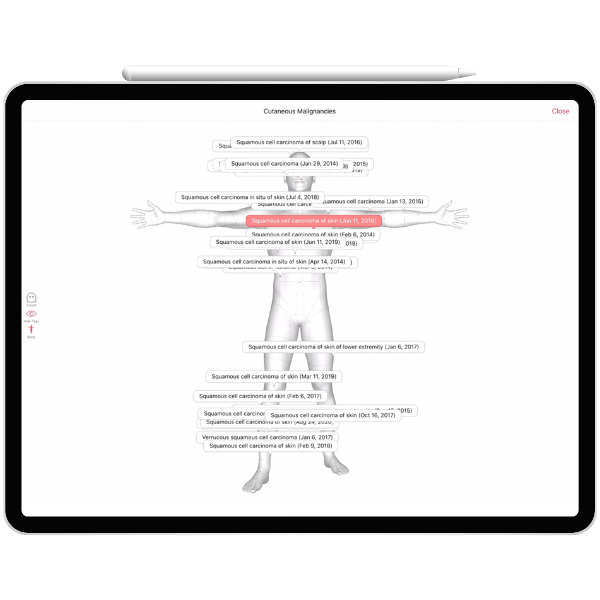
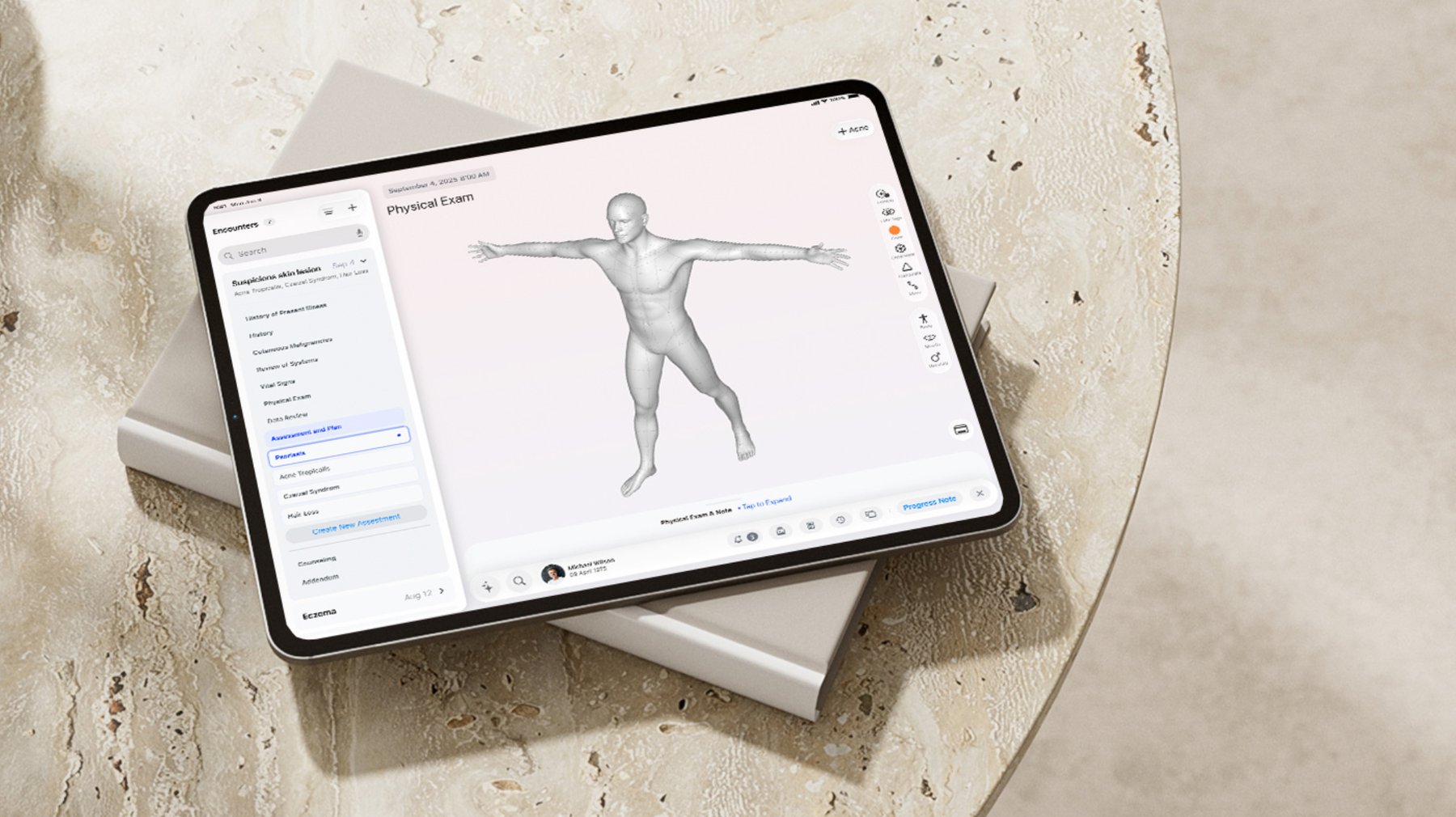
3D Body Mapping for Lesion Tracking
Most dermatology EHRs treat the body as a flat diagram. Ezehr doesn't. The 3D Body Map gives providers an anatomically accurate, interactive view of every patient — lesion tracking, skin mapping, clinical imaging documentation, and coding all in one place, with a level of precision generic platforms can't match.
Dermatology-specific body mapping built into every encounter, every workflow, every time.
What Is Body Mapping in Dermatology Software?
Body mapping in dermatology software is the ability to document, track, and visualize lesions and skin findings on a digital representation of the human body. When it works well, it connects anatomical location to clinical notes, images, diagnoses, pathology results, and billing codes — building a complete picture of each patient's skin health over time.
Ezehr's 3D Body Map was built specifically for dermatology. It's a 365-degree interactive model with more than 3,000 SNOMED-linked anatomical locations, including sites that 2D maps miss — behind the ear, between the fingers, inside the mouth.
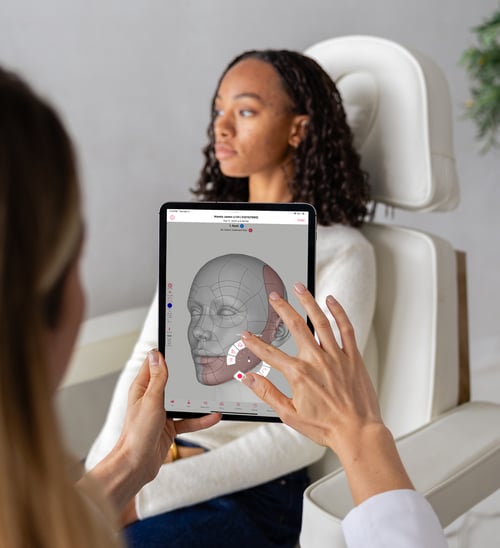

365-degree interactive model
Point, area, fold, and dermatome mapping
3,000+ SNOMED-linked locations
Fitzpatrick scale integration
Ghost mode and tag visibility controls
Normal and linear exam options

Earlier melanoma detection
Reduced unnecessary biopsies
Cleaner follow-up documentation
Malignancy tracking
Clinical Imaging Tied to the Map, Not Floating in a Folder
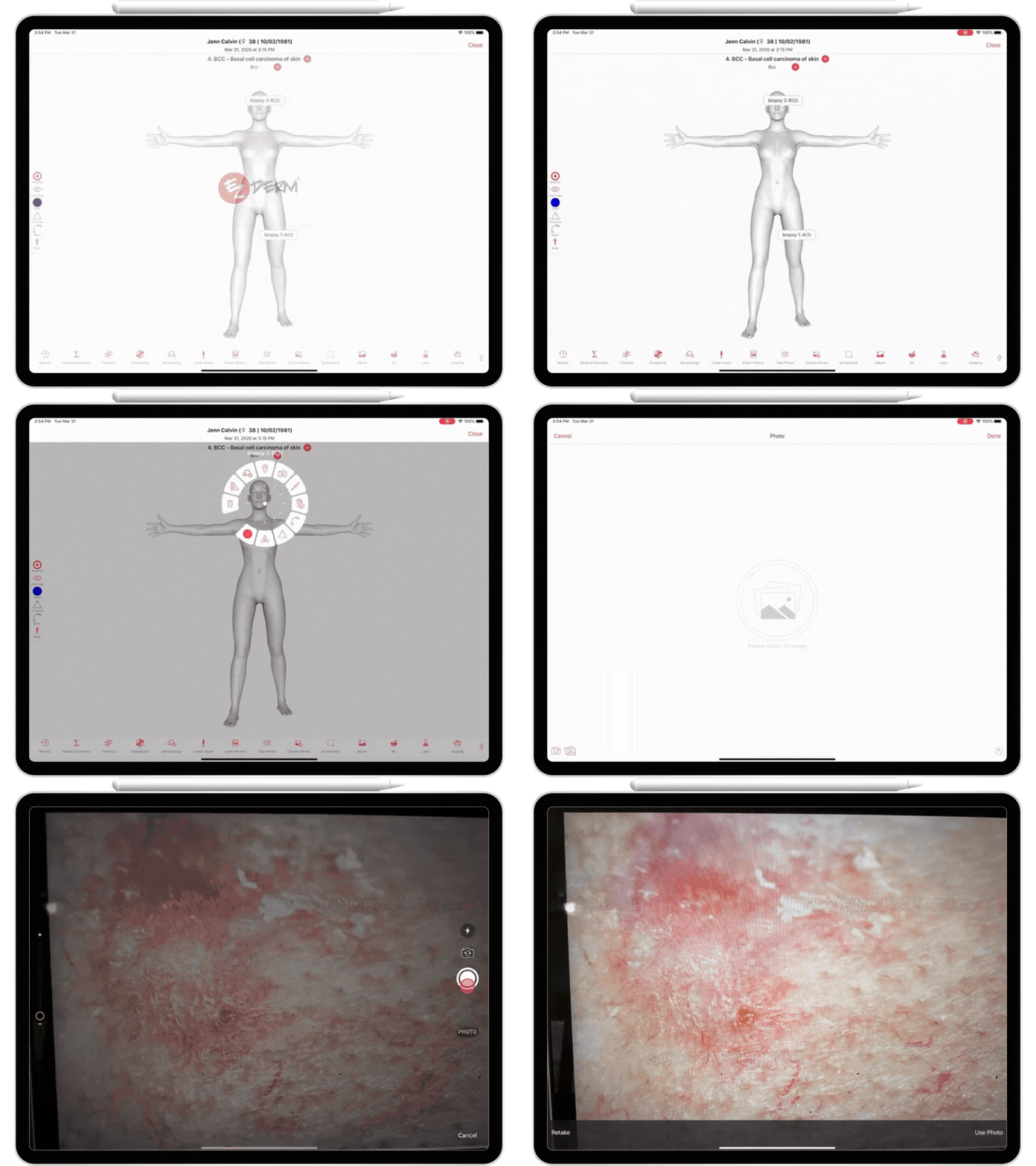
Photos taken outside the EHR create extra steps and documentation gaps. Ezehr attaches clinical images directly to the lesion site on the 3D Body Map, links them to the corresponding progress note, and keeps them in the patient's permanent record.
Over time, the photo timeline gives providers a visual history of every mapped site.
- Attach images to specific lesion locations on the map
- Build a photo timeline for each site across multiple visits
- Connect clinical images to pathology results and treatment history
- Support audit readiness with complete, site-specific imaging records
From Body Map to Billing Code, Without the Manual Steps
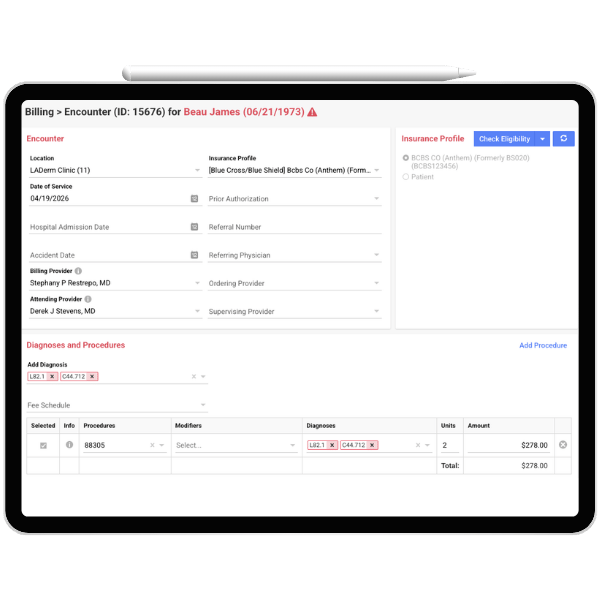
Ezehr generates ICD-10 and CPT codes directly from the 3D Body Map and the clinical documentation tied to it. Because codes are linked to precise anatomical locations and treatment plans, they're accurate from the start — fewer manual steps, fewer claim errors, fewer denials.
- Location-specific ICD-10 and CPT code generation - codes tied to mapped lesion sites and documented treatments
- Auto E&M coding - evaluation and management codes generated from documentation
- Modifier automation - common modifiers applied automatically, with manual override available
- Audit-ready records - coded documentation tied to the map, the note, and the image
Mole Monitoring Across Every Visit
For patients with a history of skin cancer, atypical nevi, or conditions requiring ongoing surveillance, each visit builds on the last. Providers track mole monitoring progress using the same mapped locations, the same photo links, and the same connected pathology records — a structured, defensible approach to skin surveillance that general EHRs aren't built to support.