
It’s true: Staffing is one of the most significant expenses dermatology entrepreneurs need to plan for when starting their own practice. While the costs of hiring, training, and health insurance coverage are certainly significant—making a solid, continuous investment in your people is what ensures quality care delivery. A qualified, satisfied, and productive staff will be empowered to deliver on the mission you set forth in your business plan.
The human side of hiring
While professional skillsets are integral in establishing your team, first consider the qualities you most value in an employee. A motivated, passionate, loyal, and curious person who works well with others will be your biggest asset. Be sure to identify candidates who are personable and teachable under strong leadership.
"People can learn everything, but they can't learn how to be nice, trustworthy, and passionate."
—Patty P., Missouri
Your necessary staffing levels and the skillsets required will vary greatly based on the type of services you plan to offer. For example, a high-volume general clinical practice will have different staffing needs than a Mohs-focused provider. Regardless, focusing first on hiring for administrative positions will power the optimizing of daily procedures and enable providers to do their job efficiently. Office manager candidates, for example, must be capable of “wearing many hats” as they move processes forward through workflows, coordinating with staff, insurance providers, and patients.
As your practice is starting out, consider hiring only the staff needed to fulfill initial patient volumes. This will protect cash flow until volumes become more established–You can always scale up staff as you go. However, be sure that your pool of staffers is large and diverse enough to run the office in the event an employee calls out of work.
Establishing and maintaining a positive office culture
For a dermatology practice to be successful, a positive relationship between office staff members and the practicing physician—or physicians—is critical. When developing your style of office management and its related policies and procedures, consider how a practice atmosphere can facilitate employee retention and high employee morale.
Ideally, management creates an environment that is comfortable and friendly. While certain practice situations may call for urgency, day-to-day operations should feel calm. A relaxed workplace lends to open conversations—both professional and personal—that make employees and patients feel seen and heard as individuals. While praising and encouraging individual staff members is important, it’s also critical to focus on a team dynamic where all employees are driving toward the same goals together. Alternatively, negativity or gossip among staff members creates a toxic environment and should be addressed for resolution immediately in direct, private conversations.
"I have lead by example. My attitude completely dictates the day. So if I'm positive, energetic, and feeling good-that's how the rest of my staff is going to feel. If you love what you do and you're happy to be a practice owner, it will show. Your staff will be happier and your patients will be happier."
—Stephanie F., Ohio
Fostering a positive office culture also means getting to know employees outside their daily behaviors that make the office run. Take the time to ask about their families, what they do for fun, and their motivations in life. By engaging in events outside the office, you can connect with employees and make memories that bond a strong team. Opportunities include simple monthly happy hours or dinners, an employee holiday gift exchange, a staff escape room, or a group cooking class. These inclusive and intentional events are a way to establish a strong culture that supports a practice’s “personality” for deeper engagement, meaning, and satisfaction.
Operationally, it’s important that practice leaders communicate often with employees about policies and procedures — especially if changes occur — to foster genuine understanding about management decisions. By welcoming opinions from staff about how the practice is running, you demonstrate that their opinions are valued. Employee surveys and 360-degree evaluations — performance reviews that gather feedback from an employee's manager, peers, and direct reports (if applicable) — are other ways to solicit opinions on your dermatology practice. Finally, employees feel appreciated if they are strongly compensated for their work. Pay employees well, and they are more likely to stay at the practice.
"We take people's feedback really seriously. The more that your employees feel like they're being heard and the more seriously they feel like their concerns are being taken, the more job satisfaction they're going to feel."
—Stephanie F., Ohio
Prioritizing training, weighing experience
Most practice owners prefer to hire staff with prior healthcare experience, and more specifically, dermatology practice experience. If you have a trusted, reliable contact from a previous place of employment, he or she may be a candidate to consider for your new practice. A well-trained office manager and medical assistant (MA) are integral to operational success.
While an office manager position is primed for those who have previously managed a practice, there are various approaches to consider in successfully fulfilling dermatology MA roles. Responsible for performing both administrative and clinical tasks, MAs should be well trained in the specialty. Develop formal staff training programs for implementation, and ensure employees are familiar with common dermatology cases, treatments, terminology, and medications. Some dermatology owners prefer to fill MA roles with gap-year medical students. For hiring, partnering with companies dedicated to matching gap-year students with practices and advertising at local colleges and universities can be productive. While gap-year MAs will likely only stay with your practice for one to two years, they typically are highly educated and motivated.
"Gap year students are so bright. They're engaged because they have a vested interest in going into medicine. They are excited to learn and passionate about it. It's not just a job to them."
—Patty P., Missouri
Alternatively, some dermatology practice owners prefer career MAs who have been in the field for decades. These seasoned professionals are used to working on clinical teams and are less likely to leave the practice. Ensure your MA is able to chart accurately, interface well with patients, call back pathologies, and seamlessly engage with practice software to ensure smooth workflows.
Prioritizing and investing in comprehensive training for all staff, especially in areas like dermatologic procedures, management of the electronic medical records and practice management systems, and billing processes is essential for success. Not every employee must be cross trained on all practice tasks, but some staff members should be capable of covering different roles. For example, hire and train an MA who can also work the front desk. Encourage regular shadowing at the practice so, for example, your receptionist witnesses the nature of your daily interactions with patients. Cross-training and shadowing among staff breeds empathy and deeper understanding across various roles on the team.
Leveraging partnerships
While staff training on use of dedicated software systems is important for effective implementation, often vendor partnerships enable more efficient delivery of services. Outsourcing software that streamlines practice management functions with billing, the EHR, and patient portal can improve both convenience for users and affordability for practice owners. Dermatology practice owners can also consider the use of virtual assistants to shoulder the burden of administrative tasks like appointment scheduling, insurance verification, and data entry, leaving more time with patients for in-house staff. Note that templates and dictation tools may also help employees save time, while secure, AI-supported communications solutions can help consolidate and streamline messaging, calls, and other communication needs.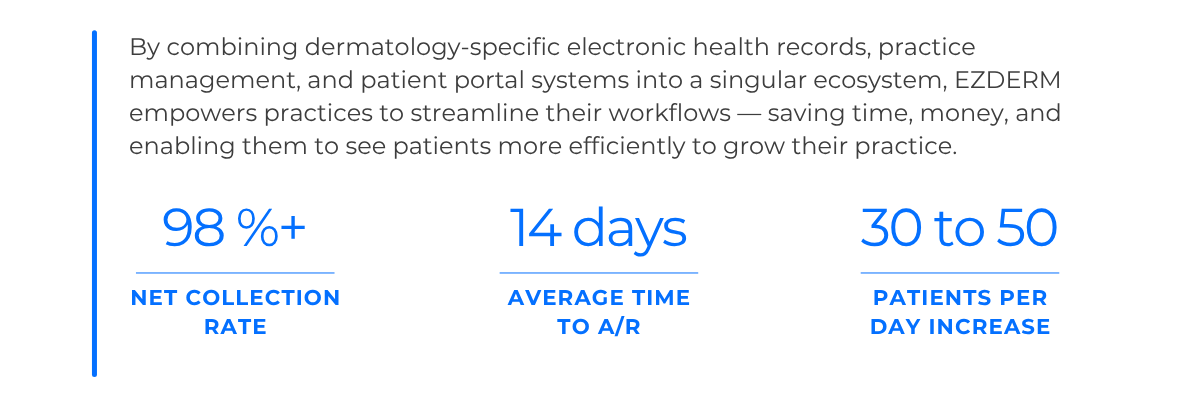 Outside of technology supporting operational aspects of practice management, owners make decisions to partner with outside consultants on non-clinical matters such as accounting and legal issues, and with vendors on utilities and equipment. Strong and trusting relationships with individuals at organizations that supply quality services positively impact staff satisfaction. When selecting partners for the practice, trial and error is commonplace; try not to commit to any long-term contracts. Clinically, partnering with a quality, trusted, responsive dermatopathology laboratory is critical.
"The importance of having a direct connection or relationship with your dermatopathology lab cannot be overstated."
—Stephanie F., Ohio
Finally, after you have built your practice from the ground up, honor your efforts by retaining the people who most deserve the opportunities presented. If a staff member or vendor partner is not performing adequately, it is wise to part ways. Value employees who are committed to your mission, providing a supportive work environment where your entire practice can thrive.